
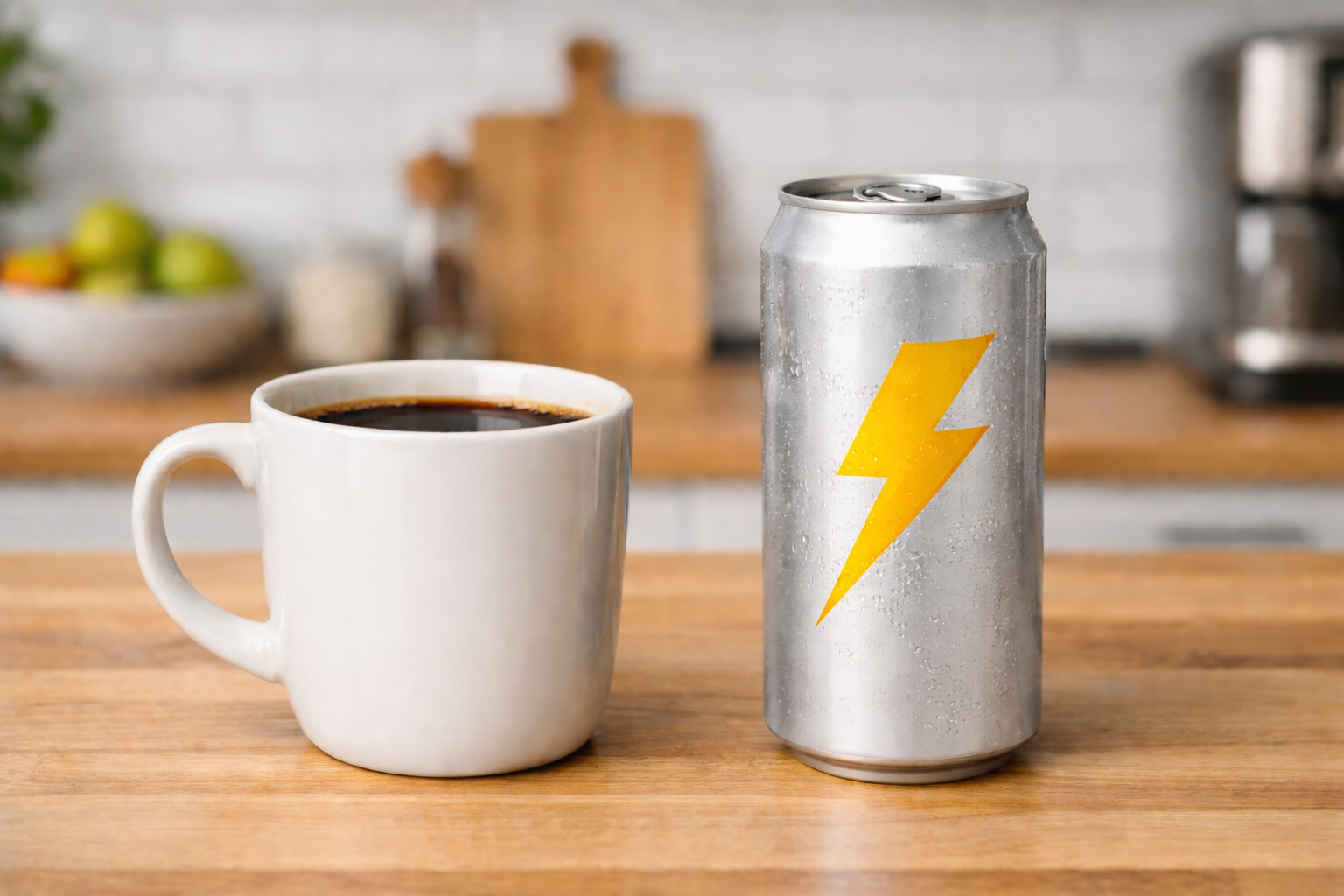
Coffee vs Energy Drink
What Is The Best Fat Loss Supplement?
The number one supplement for fat loss is one that many people already take without realizing its benefits, and it’s caffeine! Caffeine activates the nervous system and has been shown to increase daily energy use, decrease energy intake, reduce the amount of effort you perceive during a workout, and improve the feeling of being awake and alert.
Now, this isn’t me saying you should go crazy and increase your caffeine intake just to lose more fat. Like most things in life, moderation is best, and understanding your personal tolerance is a must.
How Much Caffeine Is Safe?
A moderate dose of about 1.4 to 1.8 milligrams per pound of body weight is best, so long as you don’t exceed 400 milligrams in a single day, since the side effects may start to outweigh the benefits. These higher doses of 400 to 500 milligrams, especially when combined with other stimulants, may cause adverse side effects, and doses exceeding 10 grams (10,000 mg) are considered fatal.
Keeping the dosage lower is best, and you should always proceed with caution when ingesting any form of caffeine. So take a good look at the can when you pick up that energy drink, or weigh out those grounds to know exactly how much coffee you’re using!
Be Careful With “Fat Burner” Supplements
In addition to caffeine, many weight-loss supplements contain multiple stimulants that are advertised as “fat burners”. It’s important to be cautious of these supplements because they often lack the trials to support their claims and the safety of their use. Supplement brands aren’t required to test their products, so it’s best to do some research yourself and go for the brands that have verified, third-party tests to support their claims.
Brands also tend to have “Proprietary Blends” that contain multiple ingredients. These blends won’t have the amount of each ingredient listed on the label, so it’s better to do more research on them yourself or avoid taking them entirely.
The Caffeine Comparison: Energy Drinks vs Coffee
Many people are afraid of energy drinks because of their higher caffeine content. To put things into perspective, here’s the average caffeine content in some common beverages and supplements.
| Source | Average Caffeine Content |
|---|---|
| Coffee (8 oz) | 85–100 mg |
| Black tea (8 oz) | 55 mg |
| Soda (20 oz) | 58 mg |
| Energy drink (16 oz) | 152 mg |
| Energy shot (2 oz) | 207 mg |
| Fat burner pills (2 pills) | 200–225 mg |
While it’s true that an energy drink will have more caffeine than a single cup of coffee on average, a lot of people have just as much caffeine, if not more, throughout the day from coffee as they would from a single energy drink. Of course, there are some outliers with higher caffeine content per can, so it’s still important to check the amount prior to drinking any caffeinated beverage.
The effects of the caffeine you consume also rely on the speed at which you ingest it. An energy shot taken all at once will almost certainly be more noticeable than that Venti Latte you’ve been sipping on the past five hours.
Other Fat Loss Compounds
While caffeine has the strongest evidence behind it, there are a few other compounds that may support fat loss. These include P-Synephrine, Capsaicin, and Phaseolus Vulgaris.
Since these additional stimulants aren’t backed by as much research as caffeine, I don’t recommend using these stimulants without fully understanding the risks. Take your time to do the research on the proper dosage and timing of these supplements to get the most out of them in the safest way possible. Always err on the side of caution if the label is unclear and simply place it back on the shelf.
Using Caffeine The Right Way
So how should caffeine actually be used if fat loss is the goal?
Fat loss isn’t about finding the perfect supplement. It’s about building habits you can stick to consistently. All of these supplements are meant to be exactly as the name suggests. Supplements like caffeine can provide a small boost, but they should always support your training, nutrition, and lifestyle, not replace them.
Focus on the fundamentals and habits first, and everything else becomes much easier after that.
If you want help building a plan that works for your schedule and goals, you can set up a free 30 minute consultation with me below!